Wednesday, December 16, 2015

Research on Plant Benefits

Plant Benefits 

Today there are many research projects and efforts to prove the benefits of plants on the human life. One of the biggest reasons that plants are beneficial for humans is because plants have the amazing ability to clean toxins such as CO2 out of the air and convert it to Oxygen, the very gas that we need to survive in the world.


A second huge reason we need plants is because plants feed the world. Mass crop production provides the staples of grains, fruits and vegetables that sustain human life.


When God and Jesus Christ created this world for us to live on, they understood exactly how our bodies would work and function. They understood that we would need plants for food, for oxygen, and for comfort. 


A huge movement now is bringing the outdoors inside. Humans have evolved to the point where they hardly ever spend time outdoors in nature as they ought to. Many companies and colleges and individuals have done research on the long term effects reduced time in nature can cause on human life.

One aspect of indoor plants is that they will help clean the breathing air for us. All they require is sun, soil, water and air to begin the purification process. Studies have shown that people in homes that had plants as part of the decoration we generally less stressed and more relaxed.


Not only are house plants visually pleasing to the eye, they carry that air cleaning power which gives them more of a purpose to be included indoors. NASA has done studies on the nature of plant species in not only removing CO2, but the removal of other toxins as well. NASA has found that houseplants are able to remove up to 87% of harmful household toxins within a 24 hour period. They suggested that you need one plant per every ten square yards of your home. While that may seem like a large number of plants, the benefits or clean air are amazing.


The American Horticultural Therapy Association is a establishment devoted to using plants as a therapy practice. During the course of their research this organization has discovered that plants improve cognitive function, provide psychological, social and physical benefits. Plants can increase self-esteem, improve stress levels and moods, help people feel calm and at ease and create a sense of stability. 


Researchers from Washington State University did a study of plant effects on stress levels relating to blood pressure. The subjects that were exposed to plant material had a four point blood pressure drop after taking a test where as those who were not around plants only dropped two points.  
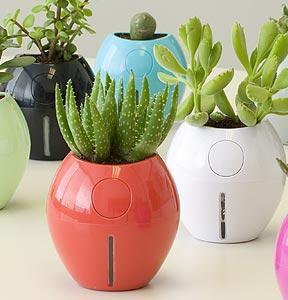


There are so many aspects and benefits of plants and they can't all be discussed here. From the research I have read I have realized that living with out plants is a waste of time. Plants are simple to take care of and do so many good things for the human environment that I believe they should be present in every building. If plants were used for air quality more often there would be many other positive effects on stress levels of people. 

Sources: http://ellisonchair.tamu.edu/health-and-well-being-benefits-of-plants/#.VnCYrNKrSig. http://www.prweb.com/releases/2012/8/prweb9796160.htm. Dayla Haderlie. http://www.healthline.com/health/importance-plants-home. http://ahta.org/


Pests and Diseases

Common Diseases of Indoor Plants

Powdery Mildew

Powdery Mildew is a fungal disease that is common on many kinds of plants. It manifests itself as a white powdery substance on the foliage of plants. If left unchecked, house plants will succumb to powdery mildew and will die. Powdery mildew is contagious so one it is noticed on a plant, the plant should be moved away from other plants immediately.


White powder on house plant

Control
The best way to control powdery mildew is to prevent it's arrival. Do not over crowd plants and keep them in a well ventilated area. Careful watering underneath of foliage will help keep fungus from growing. 

If you begin to see fungus growing on the leaves you can create your own spray to keep it from spreading. 

Powdery Mildew Spray:
1 Gallon Water
1 Tablespoon Baking Soda
1/5 teaspoon liquid soap 
1 Tablespoon horticultural oil (optional)

Mix throughly and spray on foliage of effected plants. 

There are also sprays and other products such as neem oil that are available to kill powdery mildew.

Source: gardeningknowhow.com

Blight

Blight is a plant ailment that develops in high humidity situations or when plants a left standing in too much water. It is s fungal disease that is spread by spores that are carried in the air.

Blight causes brown spots to appear on plants and will slowly kill many houseplants if left untreated. Many Ficus varieties are susceptible and African violets are often attacked by this fungus. Other symptoms include a grey mold growing on foliage of plants and distorted new growth

Control
The best way to stop blight is to take preventative measures. Make sure that indoor plants are spaced so that clean air may circulate around them. Water as needed and avoid over watering. 

If you see blight on a plant, remove it from the location of other plants so that it does not spread. There are several fungicide sprays that will help combat blight. The use of these sprays might preserve the life of your plant. 


Source: http://homeguides.sfgate.com/botrytis-blight-houseplants-62476.html

Root Rot/Crown Rot

Root or Crown Rot occurs when a plant has been over watered. When plants are over watered their roots will not have access to essential oxygen needed to be healthy. This can be a tricky problem to catch because the sign of rotting is wilted leaves.

Usually when people see wilted leaves they assume the plant needs more water so they water their plant again. If you water a wilting plant and the wilting does not correct, it means that your plant is over watered and could possibly be rotting in the root system.

To avoid root rot, always check the soil moisture before watering a plant. This can be done by poking your finger at least two inches into the soil. If you feel wet soil you plant does not need much water. By checking soil moisture before watering you will be able to make sure your plant is not sitting in too much water.

If you are not able to recognize root rot before it kills your plant, check the dead plants root system when you dispose of the plant. If the roots are dark brown and soggy you will know that root rot was the cause of the death.

Source: Dayla Haderlie


Common Pests on Interior Plants

Mealy Bug

Mealy Bugs are small fuzzy bugs that can infest and destroy house plants. They are often white and can be seen fairly easily to see against the green color of plants. Mealy bugs thrive in warm environments and will hurt plants by sucking the phloem of leaves. As the mealy bug feeds, they secrete a substance called honey dew which is sticky and stays on the plant. Honey dew attracts the growth of mold and other plant diseases which can damage the plant even further.


Mealybug Control


Control
To prevent mealy bug, clean foliage regularly and check for pests. Avoid over watering or over fertilizing plants. 

If you spot a mealy bug problem early on, you can physically remove the bugs or dab them with rubbing alcohol to control the issue. If there is a larger population, insecticidal soaps are available to help control the problem. Any neem oil product will be effective against mealy bug.

White Fly

White fly are small pests that are very mobile and visable on interior plants. During the immature stages of life, this pest chew on plant material causing damage to the health of the plant. The adult white fly also feed on plant material and also secrete honey dew which attracts the growth of mold spores. Since white fly have a relatively short life cycle, they can quickly become a large problem if left unchecked.
silverleaf whitefly - Division of Plant Industry Archive/Wikimedia Commons

Control 
Preventing a large population from developing is key in controlling this pest. Check plants regularly for signs of white fly and treat them immediately. When scouting for this pest be sure to check underneath of leaves for white spots. White fly are very tiny but their white color shows up against the green of leaves. 

Insecticidal soaps and neem oils are the best treatments for an infestation of white fly. If there are only a few visible, you can vacuum them up or remove them by hand but that could be difficult because they can fly so quickly. 


Source: http://houseplants.about.com/od/pests/a/Whiteflies.htm


Scale

Scale bugs are a small pest that range in color, size and shape. They are most often a brown or black color. Scale tends to latch onto the underside of leaves or stem tissue and suck the plant sap out of the plant. Scale secrete honey dew and are not visually appealing to people.


Scale on a Palm Frond

Control
Insecticidal soaps, neem oil and other horticultural oils are effective in getting rid of scale. Be sure that any product you use is labelled for indoor usage. These sprays are usually most effective during the crawler stage of the scale bugs life. After the scale has been killed they will usually stay on the plants for a few weeks. If they have died then they are no longer doing damage to the plant


Source: http://idl.entomology.cornell.edu/files/2013/11/Scales-on-Houseplants-ombss3.pdf

Principles and Elements of Design

Principles of Design
  • Proportion and Scale
Proportion and scale are closely linked as principles of design. The basics are to create a design that is visually please for the space it will be in. The picture below shows tall bamboo plants in an area with a large vaulted ceiling. The height of the plants is in correct proportion to the room size. The plants off to the right are smaller than the bamboo and create the correct scale for human interaction. Together, these two components work together to create a beautiful interiorscape.

  • Rhythm 
Rhythm is when there is repetition and eye movement through a design. Rhythm can be created through the use of spacing, size, shape and color. The photo below uses all of those elements to create rhythm. The color and shape and size of the bromiliads create interest and movement as you look at these planters. The pots are spaced evenly which is visually pleasing to the eye. The green foliage plants cause the bright colors to stand out by creating a background. 

  • Balance
Balance is created when the aspects of design work together and are visually pleasing. In this photo there is a water feature that is a focal point. The feature is balanced by the planter bed behind it. Both the plants and the water feature have visual balance and together they create a design larger than what they would create on their own. 
  • Unity 
Unity is linked closely with harmony. Unity is accomplished when the choice of design components look good together and  create a complete design concept. The living wall pictured below is unified because there is texture, color and form that create eye movement. As a whole, this design is pleasing to look at because nothing is out of balance or proportion. 

  • Harmony 
Harmony is created when all of the plant materials used in an interiorscape work together to create something gorgeous. Although the plants in the picture below are all different, the designer used principles of scale, proportion and balance to create a planter that has harmony. Each plant is repeated throughout the design and they work together to make this planter beautiful. 


Elements of Design
  • Color 
Color is a huge part of any kind of design. Color creates rythym, unity, dominance and contrast. The planter below is outside of a building but shows how amazing color can be. Color always attracts the attention of the human eye. This planter uses dominance and contrast to wow the people who pass by. Having a lot of color in front of a building will draw people towards it. In an interiorscape, the principle is the same. If there are pops of color throughout a design, people will be interested in being near the plants. Plants are always enjoyed when they are colorful and in bloom. 


  • Texture 
Many plants have different textures within their foliage and flowers. Texture can be actual or visual. Below is a photo of a set of living walls that are full of actual and visual texture. A few of the plants that provide texture in this design are the Boston Fern, Watermelon Peperomia and the English Ivy. Each of these plants is unique and beautiful on it's own and when they are combined in this way, they create a lot of depth and visual texture. 


  • Pattern
Pattern is created when something is repeated through a design. Plants have patterns within their own personal design, through veination, color, form and other growth habits. Pattern can also be created by grouping plants together in a certain way. The living wall pictured below is made from succulent plants that are grouped together to create a living wall art piece. The form and pattern of these plants are stunning when placed all together to create this living wall. 


  • Line and Form
Line is a great way to create movement in a design. This picture below is of three ponytail palms that are placed next to each other. The height of the planters and of the trees create a very tall and formal line. The foliage of these plants adds a huge amount to movement as they drape downwards.

Form is used to create focal points in a design. In this particular plant is an incredible form specimen. The shape is unique and linear which makes these plants very interesting to look at. Form specimen generally should be in the middle of designs to help the persons eye focus on something different and beautiful.  

  • Space and Dominance 
The photo below demonstrates spacing and dominance. Dominance can be created through many aspects such as color, form or texture. In this picture, the dominance is shown through the bright pink color of the flowers planted beneath the Madagascar Dragon Trees. 

There are two kind of space, positive and negative. The use of both kinds of space will help a designer create something interesting and aesthetically pleasing. The Dracaena trees below use both negative and positive spaces. The overall form of the trees fill positive space. They are linear and graceful. The negative space is found between the twining trunks and between the leaves of the tree. There is also negative space between each planter which creates a pattern and rhythm. 

Tuesday, December 15, 2015

Interiorscaping Plants


Common Interior Plants

Chlorophytum comosum ‘Variegatum’ (Variegated Spider Plant)

Caryota mitis (Fishtail Palm)


Peperomia obtusifolia (Baby Rubber Plant) 
Paphiopedilum hybrids (Slipper Orchid)

Zandedeschia hybrids (Calla Lily)


Schefflera actinophylla ‘Amate’ (Umbrella Tree)

Cycas revoluta (King Sago Palm)

Peperomia argyreia ‘Sandersii’ (Watermelon Peperomia)

Phalaenopsis hybrids (Phalaenopsis Orchid)

Dypsis lutescens (Areca Palm)

Echinocactus grusonii (Golden Barrel Cactus)

Aglaonema B.J. Freeman (B.J. Freeman Chinese Evergreen)

Dypsis decaryi (Triangle Palm)

Howea forsteriana (Kentia Palm)

Strelitzia Nicolai (White Bird of Paradise)

Hydrangea macrophylla (Hydrangea)

Howea forsteriana (Kentia Palm)

Howea forsteriana (Kentia Palm)

Rhapis excelsa (Lady Palm) 
Chamaedorea seifrizii (Bamboo Palm)

Begonia masoniana (Iron Cross Begonia)


Echeveria spp. (Succulents)


Echeveria spp. (Succulents)

Aloe spp. (Aloe Plant)

Liriope muscari (Lily Grass)

Ficus binnendykii ‘Alii’ (Alii Fig)

Hypoestes sanguinolenta (Polka Dot Plant)


Dieffenbachia maculata ‘Camille’ (Camille Dumbcane)

Aglaonema ‘Silver Queen’ (Silver Queen Chinese Evergreen)

Podocarpus macrophyllus ‘Maki’ (Southern Yew)

Aglaonema Silver Bay (Silver Bay Chinese Evergreen)

Schlumbergera truncata (Christmas Cactus)

Asplenium nidus (Bird’s Nest Fern)

Ficus benjamina (Ben Fig)

Platycerum bifurcatum (Staghorn Fern)


Dracaena reflexa ‘Song of India’ (Song  
Guzmania spp. (Bromiliad)

Cyclamen persicum (Cyclamen)

Monstera deliciosa (Split Leaf Monstera)

Rhododendron simsii (Azalea)

Nephrolepis exaltata ‘Bostoniensis’ (Boston Fern)

Dieffenbachia amoena ‘Tropic Snow’ (Tropic Snow)

Radermachera sinica (China Doll)


Cymbidium hybrids (Cymbidium Orchid)

Schefflera arboricola (Dwarf Schefflera)

Asparagus densiflorus ‘Sprengeri’ (Asparagus Fern)


Dracaena cincta (Madagascar Dragon Tree)

Adiantum raddianum (Maidenhair Fern)

Nemathanthus gregarious (Goldfish Plants)

Sedum morganinanum (Dokey Tail)


Pittosporum tobira (Japanese Pittosporum)

Araucaria heterophylla (Norfolk Island Pine)

Dracaena deremensis ‘Lemon-Lime’ (Lemon-Lime Dracaena)

Dracaena fragrans ‘Massangeana’ (Corn Plant)

Nephrolepis obliterate ‘Kimberly Queen’ (Sword Fern)

Spathiphyllum spp. (Peace Lily)

Anthurium andraeanum (Anthurium)

Aphelandra squarrosa (Zebra Plant)
Strelitzia reginae (Bird of Paradise)